The rumble of an engine, the whoosh of a train, the silent glide of a bicycle—transportation shapes our lives, economies, and planet in profound ways. But as the world grapples with climate change and urban congestion, a critical question emerges: how can we move people and goods without compromising the future? The answer lies in Sustainable Transportation, a holistic approach that promises not just cleaner commutes, but also healthier communities and more resilient economies. It's about rethinking every journey, from the shortest walk to the longest freight haul, to ensure long-term viability for everyone.
At a Glance: Why Sustainable Transportation Matters Now
- Reduces Pollution: Cuts greenhouse gas emissions and improves air quality, leading to better public health.
- Boosts Equity: Ensures everyone, regardless of income or ability, has affordable and safe access to opportunities.
- Strengthens Economies: Creates green jobs, lowers fuel costs, and enhances economic competitiveness.
- Fosters Livable Cities: Leads to less traffic, quieter streets, and more vibrant, people-centered urban spaces.
- Innovates Technology: Drives the development of electric vehicles, smart infrastructure, and alternative fuels.
- Builds Resilience: Decreases reliance on volatile fossil fuel markets and creates more adaptable systems.
What Exactly is Sustainable Transportation? Beyond "Green"
When you hear "sustainable transportation," it's easy to picture electric cars or bike paths. While those are certainly key components, the concept is far broader and deeper. Sustainable transportation aims to minimize the negative environmental, social, and economic impacts of moving people and goods, while ensuring accessibility and affordability for all. It's not just about what we drive, but how our cities are built, how goods are shipped, and how we choose to live.
This comprehensive vision goes beyond simply "green transportation," which primarily focuses on reducing environmental impact, particularly greenhouse gas emissions. Sustainable transportation, however, weaves in crucial social equity and economic viability threads, recognizing that a truly viable system must benefit everyone and contribute to a strong, resilient economy. As the European Union Council of Ministers of Transport articulates, a truly sustainable system allows basic access and development needs to be met safely, consistent with human and ecosystem health, promotes equity, is affordable, fair, efficient, offers choice, supports a competitive economy, balances regional development, limits emissions/waste, uses renewable resources sustainably, and minimizes land use/noise impacts. It’s a tall order, but one with immense rewards.
The Three Pillars of Progress: Building a Better Way to Move
Sustainable transportation isn't a single solution; it's a framework built upon three interconnected pillars that support a flourishing future. Ignore one, and the whole structure wobbles.
Pillar 1: Environmental Harmony – Cutting Our Carbon Footprint
At its core, sustainable transportation seeks to heal our planet. Our current transport systems are a major contributor to environmental degradation. In 2018, transportation was responsible for 20% of global CO2 emissions, and these emissions are growing faster than any other energy-using sector.
Environmental sustainability in transport means:
- Reducing Greenhouse Gas Emissions: Shifting to cleaner fuels like advanced biofuels or zero-emission electric vehicles (EVs) dramatically lowers the carbon footprint.
- Conserving Natural Resources: Utilizing recycled materials in infrastructure and vehicle manufacturing, and minimizing the energy intensity of travel.
- Protecting Biodiversity: Planning infrastructure to avoid habitat fragmentation and minimize ecological disruption.
- Reducing Air and Noise Pollution: Less exhaust means cleaner air, reducing respiratory illnesses. Quieter vehicles and less traffic mean less noise, which improves mental health and quality of life.
The goal here is a transportation system that coexists with nature, rather than dominating it.
Pillar 2: Social Equity and Access – Mobility for All
A truly sustainable system ensures everyone can get where they need to go, safely and affordably, regardless of their background. Unfortunately, many current systems inadvertently create a "transport divide." Social costs like road crashes, air pollution, and physical inactivity often disproportionately affect those least likely to own cars – low-income groups, the elderly, and those with disabilities.
Social equity in transportation means:
- Universal Accessibility: Designing infrastructure and services that are usable by people of all ages and abilities.
- Affordability: Providing economical choices, such as subsidized public transit fares or accessible shared mobility options.
- Safety for All: Prioritizing the safety of pedestrians, cyclists, and public transit users, not just motorists.
- Inclusive Planning: Ensuring underserved communities have a voice in how transportation systems are planned and developed, improving their access to jobs, education, and healthcare.
When transportation is equitable, it builds stronger, more connected communities where everyone has the opportunity to thrive.
Pillar 3: Economic Resilience and Innovation – Fueling Growth
Sustainable transportation isn't a drain on the economy; it's an investment in a more robust and innovative one. It moves us away from costly, volatile fossil fuels towards diversified, often local, energy sources.
Economic viability in transportation means:
- Reducing Costs: Improving fuel efficiency, promoting more affordable modes of transport, and reducing the economic burden of traffic congestion.
- Creating Green Jobs: Fostering employment in manufacturing EVs, building public transit, developing renewable energy infrastructure, and other growth sectors within the green economy.
- Improving Competitiveness: Efficient, reliable, and modern transportation systems attract businesses and skilled workers, enhancing a region's economic standing.
- Reducing Fossil Fuel Reliance: Diversifying energy sources makes economies less vulnerable to global oil price fluctuations and geopolitical instability.
By making smart investments today, we build an economic future that is both prosperous and sustainable.
Your Journey to Sustainable Mobility: Options and Technologies
The path to sustainable transportation is paved with diverse choices and exciting innovations. From ancient modes to cutting-edge tech, here's how we're changing the way we move.
Embracing Active Travel: The Original Sustainable Mode
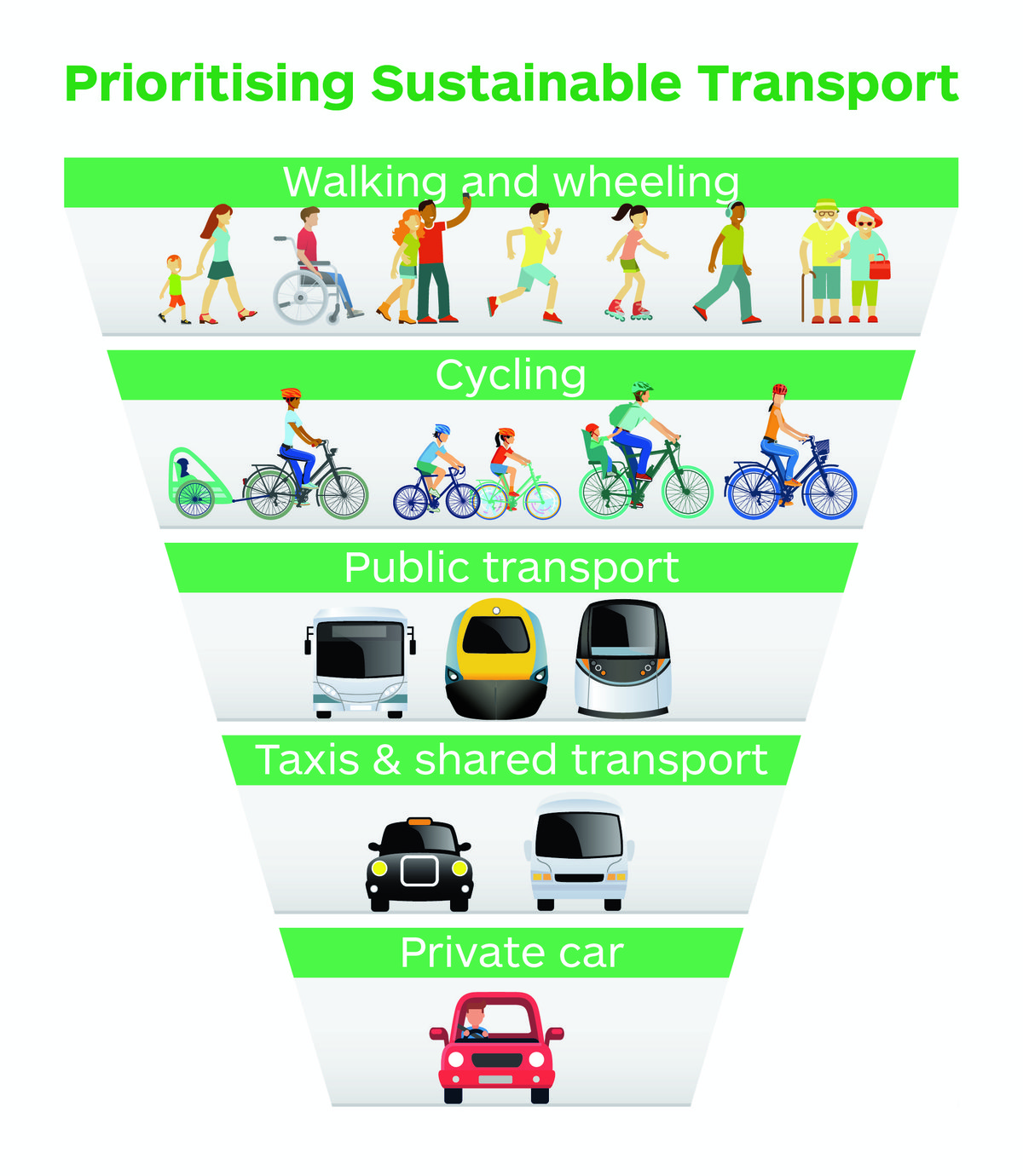
Sometimes the best technology is simply our own two feet. Walking, cycling, and scootering are the most sustainable forms of transport, offering zero emissions, promoting physical health, and reducing traffic congestion. Cities like Amsterdam, where 31% of trips are by bicycle, and Copenhagen, with 62% of commuters cycling, demonstrate the incredible potential when infrastructure supports active travel.
The Power of Public Transit: A Collective Solution
Buses, trains, subways, light rail, and ferries form the backbone of sustainable urban mobility. They move large numbers of people efficiently, significantly reducing individual car trips and their associated emissions. Bogota, Colombia, offers a stellar example with its TransMilenio Bus Rapid Transit (BRT) system, moving 43,000-48,000 passengers per hour on exclusive lanes, complemented by over 560 kilometers of dedicated bike lanes. Globally, many cities are embracing the exciting future of public transport by expanding networks and integrating new technologies.
Electrifying Our Rides: The EV Revolution
Electric Vehicles (EVs) – from cars and trucks to buses and motorcycles – are quickly becoming mainstream. They offer zero tailpipe emissions, significantly lower greenhouse gas emissions (especially when powered by renewable energy), reduced noise pollution, and increased energy efficiency compared to internal combustion engines. It's crucial, however, to consider lifecycle emissions, which include battery manufacturing and the source of electricity used for charging. Innovations like Online Electric Vehicle (OLEV) technology, which allows charging while stationary or even driving via embedded road cables, hint at a seamless electric future. Governments and industries are recognizing this shift, with incentives driving electric vehicle adoption across many nations.
Sharing the Load: Collective Mobility
Shared mobility services like carpooling, ridesharing, bike sharing, and scooter sharing maximize the use of existing vehicles and assets. Carsharing, for example, is estimated to reduce car ownership at a rate of one rental car replacing 15 owned vehicles, drastically cutting down on the number of vehicles on the road and parking demand.
Fueling the Future: Alternative Energy
Beyond electricity, other alternative fuels are playing a role. Biofuels (especially second to fourth-generation, which show significant environmental benefits over first-generation), hydrogen, and compressed natural gas (CNG) offer pathways to lower emissions, particularly for heavy-duty transport where electrification is still evolving.
Optimizing Freight for a Greener Supply Chain
The movement of goods is a massive, often overlooked, contributor to emissions. Sustainable freight involves:
- Efficient Logistics: Streamlining routes and consolidating shipments.
- Modal Shift: Moving freight from trucks to more fuel-efficient rail for long distances.
- Alternative Fuels: Deploying electric trucks and ships, alongside biofuels and hydrogen.
- Last-Mile Innovation: Using cargo bikes or electric vans for urban deliveries.
Redesigning Our Cities: The Role of Urban Planning
Our cities are not just backdrops for transportation; they actively shape our travel choices. Thoughtful urban planning is a cornerstone of sustainable mobility.
- Compact, Mixed-Use Development: Planning communities where homes, workplaces, shops, and services are close together naturally reduces the need for long commutes.
- Prioritizing People: Investing heavily in high-quality pedestrian and bicycle infrastructure, making walking and cycling safe, convenient, and enjoyable. Bogota's extensive bike lanes are a testament to this.
- Robust Public Transit: Building efficient, reliable, and extensive public transit networks that are integrated with land use.
- Managing Demand: Implementing strategies like congestion pricing (pioneered in Singapore in 1975) and smart parking management to discourage unnecessary private vehicle use.
- Transit-Oriented Development (TOD): This approach creates vibrant, mixed-use communities centered around public transit stations, making it easy and attractive to walk, cycle, and use public transport. Understanding principles guiding smart city planning is crucial for creating these integrated, livable environments.
By intentionally designing cities around people, not just cars, we unlock massive potential for sustainable living.
Individual Impact: How You Can Drive Change
While large-scale policy and infrastructure are critical, your individual choices collectively make a huge difference.
- Choose Wisely: Whenever possible, opt for walking, cycling, public transit, or carpooling. If you drive, consider an EV.
- Reduce Travel Demand: Can you work from home, consolidate errands, or choose online shopping? Every trip not taken is a win for sustainability.
- Drive Efficiently: If you must drive, avoid aggressive acceleration and braking, maintain proper tire pressure, and keep your vehicle well-serviced. These habits significantly improve fuel efficiency.
- Advocate for Change: Support policies and projects that promote sustainable transportation in your community. Talk to friends, family, and local leaders about the benefits.
- Educate Yourself: Stay informed about new technologies and local initiatives. The more you know, the more effective you can be.
Driving Policy Forward: Government and Global Initiatives
Governments, both local and national, hold immense power to accelerate the shift to sustainable transportation through policy and investment.
- Infrastructure Investment: Funding high-quality public transit, bike lanes, and pedestrian walkways is fundamental.
- Incentives for Adoption: Offering tax breaks, rebates, or preferential parking for EV purchases, or subsidies for public transit users. Iceland, for example, offers monthly payments for employees who don't drive to work, and the UK has employer-provided bike-to-work schemes.
- Regulation and Standards: Setting stringent fuel efficiency standards (like those in the US and Europe) and mandating emissions reductions. France, for instance, now requires advertising disclaimers for automobiles (starting March 2022) and will make it illegal to advertise vehicles emitting over 128g CO2/km by 2028.
- Strategic Planning: Developing comprehensive transportation plans that prioritize sustainability, integrate land use, and set clear emission reduction targets, such as the UK's Climate Change Act (2019) aiming for 100% GHG reduction by 2050.
- International Collaboration: Networks like the C40 Cities Climate Leadership Group, a network of 94 cities, work together to share best practices and accelerate climate action, including sustainable transport initiatives. Cities like Freiburg, Germany, have implemented extensive public transport, cycling infrastructure, and car-free zones, setting a global benchmark.
The COVID-19 pandemic, surprisingly, spurred some cities like Milan, London, New York City, and Paris to rapidly increase biking and walking infrastructure to facilitate social distancing and prevent a surge in car use. This showed how quickly cities can adapt when political will and public support align.
Navigating the Roadblocks: Challenges to Widespread Adoption
While the benefits are clear, the journey to sustainable transportation isn't without its bumps.
- High Upfront Costs: EVs can be more expensive to buy than gasoline cars, and building new public transit infrastructure requires substantial capital.
- Infrastructure Gaps: A lack of ubiquitous EV charging stations, safe bike lanes, or comprehensive pedestrian networks can deter adoption.
- Resistance to Change: Shifting deeply ingrained travel habits, particularly in car-centric cultures, can be challenging.
- Policy Barriers: Existing regulations or funding mechanisms might inadvertently favor traditional, car-dependent transportation modes.
- Funding Limitations: Securing consistent and adequate funding for sustainable transportation projects can be a significant hurdle.
- Equity Concerns: Ensuring that new solutions are truly accessible and affordable for all, and don't inadvertently create new forms of exclusion, is paramount.
Overcoming these challenges requires concerted effort from governments, businesses, and individuals working together.
The Unmistakable Benefits: Why This Matters to You
The shift to sustainable transportation isn't just an environmental necessity; it's a profound upgrade to our quality of life and economic well-being.
A Healthier You, A Healthier Planet
- Improved Air Quality: Reduced vehicle emissions mean cleaner air, directly lowering rates of respiratory and cardiovascular illnesses. The UNEP estimates 2.4 million premature deaths from outdoor air pollution could be avoided annually with better air quality.
- Increased Physical Activity: More walking and cycling inherently lead to better cardiovascular health, reduced obesity rates, and improved mental well-being.
- Reduced Noise Pollution: Quieter electric vehicles and less traffic ease stress, improve sleep, and enhance overall quality of life in urban areas.
- Fewer Traffic Fatalities: Prioritizing non-motorized transport and safer road designs reduces accidents and saves lives.
Economic Wins for All
- Job Creation: The transition fuels a green economy, creating jobs in manufacturing, infrastructure development, and service industries related to new transportation technologies.
- Commuter Savings: More affordable options like public transit and active travel save households significant money on fuel, maintenance, and parking.
- Government Budget Relief: Reducing traffic congestion, road maintenance needs, and public health costs can free up government funds.
- Increased Competitiveness: Efficient, reliable transport systems make regions more attractive for business investment and talent.
Stronger, More Connected Communities
- Enhanced Social Cohesion: Access to affordable and safe transportation connects people to jobs, education, healthcare, and social activities, reducing isolation.
- Vibrant Public Spaces: Less traffic allows cities to reclaim streets for parks, plazas, and pedestrian zones, fostering community interaction.
- Addressing the "Transport Divide": Sustainable transportation actively works to eliminate disparities, ensuring everyone has the mobility they need to participate fully in society.
Looking Ahead: The Future of Mobility
The road ahead for sustainable transportation is dynamic and filled with potential. Expect to see:
- Pervasive Electrification: EVs will become the norm across all vehicle types, powered increasingly by renewable energy.
- Integrated, Intelligent Systems: Smart cities will leverage data and AI to optimize traffic flow, public transit schedules, and shared mobility services, creating seamless journeys.
- Shared and Autonomous Vehicles: Autonomous vehicles, when integrated into shared fleets, could dramatically reduce vehicle ownership and optimize road capacity.
- People-Centric Urban Design: Cities will increasingly prioritize pedestrians, cyclists, and public spaces over private cars.
- Global Collaboration and Innovation: Patenting activity in future transportation technologies has seen substantial growth, from 11,000 published patent families in 2000 to almost 120,000 in 2020, particularly in sustainable propulsion and communication/security technologies. This surge in innovation reflects a collective global push.
Historically, the post-WWII boom in motorization led to significant declines in public investment for transit, walking, and cycling in some Western nations. However, concerns, particularly during the 1970s oil crises, spurred innovations like congestion pricing and Bus Rapid Transit. Today, the concept of "mobility transition" describes this vital shift towards sustainable transport, renewable energy, and integrated systems to improve urban livability and protect our planet. It's about remembering that the ultimate goal of transportation isn't just to move vehicles, but to move people and ideas forward, sustainably. To truly understand the interconnectedness of these efforts, you can Learn more about the earth emoji and the broader sustainability context.
Your Next Steps Toward a Sustainable Journey
The vision for sustainable transportation is clear, compelling, and within reach. It’s a journey we embark on together, requiring innovation, policy shifts, and individual commitment.
Consider how you can engage:
- Evaluate Your Commute: Are there opportunities to walk, cycle, or use public transit more often?
- Explore EV Options: Research electric vehicles if you're in the market for a new car, and check for local incentives driving electric vehicle adoption.
- Support Local Initiatives: Pay attention to urban planning decisions in your community. Engage with proposals that promote active transport, public transit expansion, and principles guiding smart city planning.
- Advocate for Policy: Speak with your elected officials about the importance of investing in sustainable transportation infrastructure and policies.
- Educate and Inspire: Share what you've learned with friends, family, and colleagues. Every conversation helps to normalize and accelerate this vital transition.
By understanding the interplay of environmental, social, and economic factors, and by taking action at every level, we can truly drive progress towards a future where mobility enhances, rather than diminishes, the world we inhabit.